
All S.T. Dupont lighter models: 1935 to present.
This article offers a complete guide of all S.T. Dupont models ever produced. It follows the period of 1935 to present day and not only names the different models, but strongly focusses on the social-historic context the shaped the direction S.T. Dupont took throughout the ages. For this article the primary source 'Eternal Flame' a book commemorate the 75 years of S.T. Dupont lighters has been intensively used. With this source we could uncover some unique insights into the fascinating history of the brand.
Models from these lines that we currently hold are listed under used S.T. Dupont lighters, each one serviced and authenticated before sale.
The early period: 1935-1941
S.T. Dupont was founded by Simon Tissot Dupont, his sons took the company in the direction of luxury travelcases in the late 19th and early 20th century. S.T. Dupont made custom luggage and accessories for elite Parisian and international customers. Back in those days, luggage was still large and had plenty of room for foldable mirrors, glass bottle and lighters...
While S.T. Dupont formally considers its production lighter to date back to 1941, it produced some exclusive lighters, made on order, for its travel cases from 1935 onwards
Le Sultan (1935)
Le Sultan is considered S.T. Duponts first ever lighter. Fuelled with petrol, it is a classic flip arm design that was popularised by Alfred Dunhill. It is an extremely rare model made in very limited quantities. Two designs are known to the world: A black Laque de Chine with goldplated accents and a silver (plated) variant with an embossed design consisting of vertical stripes and texture.

Closed lid lighter (1935)
The second model has a less memorable name, but is no less desirable to collectors of this early period. It is a petrol lighter with a closed lid under which its lighting mechanism is hidden. It is long and thin, making it easy to use with a single hand. The silver-plated design has embossing similar to the one found on Le Sultan.

'Essence' (1940)
Le Essence, French for petrol lighter, was S.T. Duponts first production model. It came to life after the maharajah of Patiala named Yadavindra Singh ordered five solid gold minaudières for his mistresses. A minaudières is a case with a mirror, lipstick, some cigarettes and a friction strip lighter. The maharajah however asked if the cases could be equipped with a pocketsized petrol lighter. It took Dupont 2 years to complete this order and would greatly pay off in the upcoming years. It is unknown which design S.T. Dupont used for the production of this lighter, but it most likely was a closed lid lighter with a small roller on the side.

Historic context: Wartime period
At the same time, war had struck Europe and France was occupied by Nazi Germany. The orders for luxury travel cases steeply declined and the company had to look for new products in order to survive. Thus the lighter became an object of interest for the Dupont brothers. They had previous experience, the cost of raw material was relatively low, and the production process was labour intensive enough to require its full workforce. The Vichy regime that occupied the south of France where the S.T. Dupont factory on the Faverges land was located, rationed the use of brass to a single kilo per month. This was too little to produce any lighters in large quantities, thus it was decided to use an aluminium-based alloy that could be locally sourced. The petrol lighter was a success and allowed S.T. Dupont to survive years of war.
'Essence' alloy (1941-1945)
The alloy based petrol lighter that S.T. Dupont produced during the war period follows a principle that would define S.T. Dupont lighter. A closed lid, a long vertical roller and a rectangular case. This model was available in three separate finishes: plain vertical stripes, vertical stripes with embossing, and a stunning black Laque de Chine that curved around the lighter.

Windsor petrol lighter (1945 onwards)
One of these finishes, that shows the innovation of the brand is the iconic Windsor lighter. Its design consisted of a vertical stripes and a broad black slab of black Laque de Chine. The technical innovation is that instead of fully handmade, the lighter was engine turned which allowed for more texture to solid metal. The design itself was a tribute to the Duke and Duchess of Windsor, who maintained a great relationship with the French company.

Jeroboam (petrol) (c.1945-c.1952)
The Jeroboam refers to a size unit in the world of champagnes. The Jeroboam is a table lighter, that is both longer and wider than the regular pocket lighter. It utilises the same flip arm mechanism that can be found on the Maharajah lighter. The lighter has a detachable wand that can used to light a cigar, pipe or cigarette without having to lift the Jeroboam from the table.

Historic context: Post-war growth and innovation
Post war society had significantly changed, while economy recovery was quick, the demand for luxury travel accessories did not return to the pre war level, as new travel methods such as the airplane, required much lighter travelcases than the brand could produce. Lighters were to be the new focus of the brand. Once metal became widely available again S.T. Dupont produced different finishes in gold and silver plating over brass as well as solid gold and silver models. The Faverges workshop was producing over 10,000 lighters per year as a new middle class that desired luxury products emerged around Europe. The 1950s also saw the arrival of the third Dupont generation. André Dupont, the new head of the brand turned away from a design language of luxurious abundance and instead drew inspiration from the 1930s architecture, that took 'less is more' as its motto. This resulted in the adaptation of geometric finishes on a rectangular square design, that Dupont has used ever since. Secondly, he spread the brands activities outside the french borders, by opening dealerships all around the world.
The gas lighter 1952-present
In 1948 a french petrol engineer invented the next evolution for the pocket lighter: the gas lighter. Until then all lighters had been petrol powered and the innovation quickly took over the market. one of the greatest selling points was the fact that high quality butane was odorless and thus did not ruin the flavour of an expensive cigar. Initially it was not Dupont that lead this innovation but rather the Flamaire. It took Dupont a couple years to develop a mechanism of its own, but it paid off.
D57 (1952-1960)
In 1952 the D57 was released as S.T. Dupont's first gas lighter. The unique innovation was that once the lid was opened, the precious gas, did not automatically flow out of the nozzle, but only when the roller was struck. S.T. Dupont also refined its design, the roller now had a solid band on top to differentiate from the regular petrol lighter.
Ligne 1 BS (1959-1973)
In 1959 S.T. Dupont launched the next generation of gas lighters, the Ligne 1 BS. Internally it was radically different from the somewhat archaic D57. It relied on a mechanism that carefully administered the gas. Next to that a lever allow for a more precise regulation without having to screw the nozzle more open or shut.
Ligne 1 BR (1964-2013)
The innovation of the Ligne 1 BS was not enough for the Faverges engineers as they continued development and perfected the Ligne 1 model .. x amount of year later. The Ligne 1 BS allowed flame regulation from a set point, the BR, Briquet Regable, allowed the user to fully regulate the flame with a meticulously precise roller next to the nozzle. Its longevity was proven as the model remained in production until 2013.

Ligne 1 BR table lighter (c.1970s)
The success of the Ligne 1 was translated into a new sort of table lighter. This model utilises the same mechanism as the Ligne 1 BR pocket lighter. The lighter is much longer but remains relatively slim. Thus it can be used with a single hand being lifted off the table.

Cylindrique (1971-1997)
The S.T. Dupont Cylindrique is a cylindrical lighter with a twisting band that is used to strike the flint. The finishes were strictly in gold- or silver-plating. From the 90s onward the Cylindrique had a dual flame system.
Historical context: the cultural shift of 1968
Post war, society had experienced a previously unseen economic growth. Luxurious products previously reserved for the upper class were not attainable for a huge part of society. Even more so, the S.T. Dupont lighter had acquired somewhat of an icon status in elitist circles in the 1960s and was enjoyed by people like Marilyn Monroe and Jackie Kennedy (the S.T. Dupont lighter can also be perceived as an icon of female emancipation.) A new generation, influenced by leftwing intellectuals began to question the continuity of societal values in this post war period. In 1968 large studentprotest broke out across France. everything had to change! Even the most conservative circles of France experienced the shockwaves of this cultural revolution. No longer was it desirable to openly display showcase wealth, S.T. Dupont knew this too. Thus they had to innovate once more.
Ligne 2 PN (1977-present)
After years of engineering, Dupont developed the first ligne 2 in 1972. Its design language was created in collaboration with the jeweller and designer Jean Dinh Van, who was famous for his functional and minimalist designs. The experts at Faverges had created a slimmer design which was fitted into this broader lighter. In 1977, S.T. Dupont presented the Ligne 2 Pyrophoric New. The wider, longer and slimmer lighter had moved its gas adjuster mechanism to the bottom. The Ligne 2 also had one unforeseen feature, the 'cling' sound when you open the lid. It was initially an accident and engineers tried desperately to remove it, the public on the other hand embraced it. The cling on the Ligne 2 varies widely, partly based on finish, partly luck. Some lighter had a fantastic (or annoying) 'cling' from the factory while others had virtually no sound.

Historical context: The bold 1980s
As society changed so did S.T. Dupont. The 1980s were bolder and people dared to show their riches in an extravagant matter. S.T. Dupont decided to satisfy its customers demands by turning to chinese lacquering, a technique which it was already employing for nearly a decade. Instead of monocolour designs, the maison created colourful designs
Ligne 2 table lighter (c.1980s)
The Ligne 2 table lighter follows the same theory as the Ligne 1 table lighter: adapt the mechanism to a larger body. Here too, the Ligne 2 table lighter has a long and slim body that allows for single hand use.
Ligne D (1985-2012)
S.T. Dupont had perceived its lighters as unisex, but in 1985 the brand released a lighter which was specifically marketed to women. Perhaps as a result of fashion once more relying on masculine and feminine shapes. The lighter was smaller, slimmer and featured a roller that was relatively long.

Fantasies (?)
The Fantasies line follows the design language of the Ligne D, and according to Dupont it should be perceived as a line within the Ligne D family. The fantasies were a decorative masterpiece, all were covered in lacquer, featuring extravagant designs. To make place of a larger lacquer panel, the roller was reduced in size.

Ligne 2 Gatsby (1989)
In 1989 S.T. Dupont released yet another model: the Gatsby. It was a more compact version of the Ligne 2 and featured two vertical running bands aligned with the roller on the right side of the lighter. Secondly, the name S.T. Dupont now featured on the face of the lighter. Perhaps the result of a society that was more explicit in showcasing its luxurious possessions. The name of the model is a reference to the famous novel 'The Great Gatsby' written by F. Scott Fitzgerald.

Jeroboam (gas) (c.1990s.-c.2000s)
The gas powered Jeroboam is inspired by the classic petrol Jeroboam. Its heavy, large body rests on a table top with a flip arm mechanism and a horizontally positioned roller to light the flame. On the side of a lighter a horizontal slider can be used to regulate the size of the flame.

Historical context: innovation and changing times
From the 90s onward we can see S.T. Dupont releasing a series of new models on the market. What caused this sudden desire to innovate? Unlike the history that motivated the creation of the Ligne 2, the brand stays silent on their reasons to develop the Urban, Soubreny, Maharajah and more. Times were changing, smoking was becoming less popular and cheap single use lighter were increasingly popular. The existence of the luxury refillable lighter could no longer be justified through its practicality only. It needed to have visual appeal to once again grab the attention of the smoker.
Soubreny (1994-2004)
The S.T. Dupont Soubreny was a small sized Ligne 1 variant that had rounded corners instead of the conventional square shape. It often featured gold lines in lacquer and organic shapes in gold- or silver plating that call back to Art Nouveau style.

Maharajah (1996 to 1999)
The maharajah is a pocket lighter, that features a similar system to the Jeroboam table lighter. It has a flip arm mechanism and a horizontal slider to adjust the gas flow. The roller is attached to the side similar to the Ligne 1.. The maharajah was available as limited editions only like the Teatro, Maharajah and black lacquer/palladium. It somewhat oriental design did not catch on and S.T. Dupont discontinued the lighter in favour of the Urban.
Urban (1999 to 2005)
While utilising the same mechanism as the Maharajah, the Urban had a completely different appearance. The lighter played into a theme of modernity that S.T. Dupont applied to multiple lighters. It often featured straight lines cut in the brass body. brushed palladium or rubber attachments.

The age of the jet flame
As smoking became increasingly stigmatised and banned in indoor places, coinciding with the invention of the Jet lighter, Dupont developed a series of new models. Those with a jet flame. These lighters were ideal for outdoor use as they were more resistant to wind. The windproof lighters were not luxuriously decorated in gold but often featured a plastic body. For the soft flame lighters S.T. Dupont made an attempt with more budget friendly models.
X-Tend (2000)
In the year 2000 S.T. Dupont released the first jet flame lighter on the market, named X-Tend. It was made of a streamlined aluminium shell, decorated with bright coloured prints.

Ligne 2 torch (2005)
The Ligne 2 torch was an attempt at creating a lighter that stylistically was more in line with its traditional design language. Yet what did it really achieve? S.T. Dupont was not satisfied just yet.

Ligne 2 Liberté
The Ligne 2 Liberté torch was a new veriod of the Ligne 2 torch. The torch was hidden under a lid, like a traditional Ligne 2 with a ignition button on the side and the classic knobs for refilling the lighter and adjusting the flame
D-light (2004-2006)
The D-Light was peculiar lighter within the S.T. Dupont line up. It had a long and slim rectangular body. A slider that is pushed upwards revealed the lighting mechanism with a horizontally aligned roller. A push button on the left allowed the lighting mechanism to retrace in the body. The refill valve is hidden under a brass plate. Problematically, this lighter is notoriously hard to service, thus not fit to be sold on Avenue of Aesthetic.

Liberté pen lighter (c.2005)
The Liberté was a pen shaped lighter that was produced for a short period of time. The roller was hidden under the lid.

Ligne 8 (2010)
The ligne 8 was an attempt at creating a hip, yet budget friendly lighter, that would appeal to a larger audience. It was slimmer, slightly smaller and lighter. the traditional handle to adjust the gas made place for a screw and it was not gold- or silver plated. The design felt slightly more modern in its appearance.

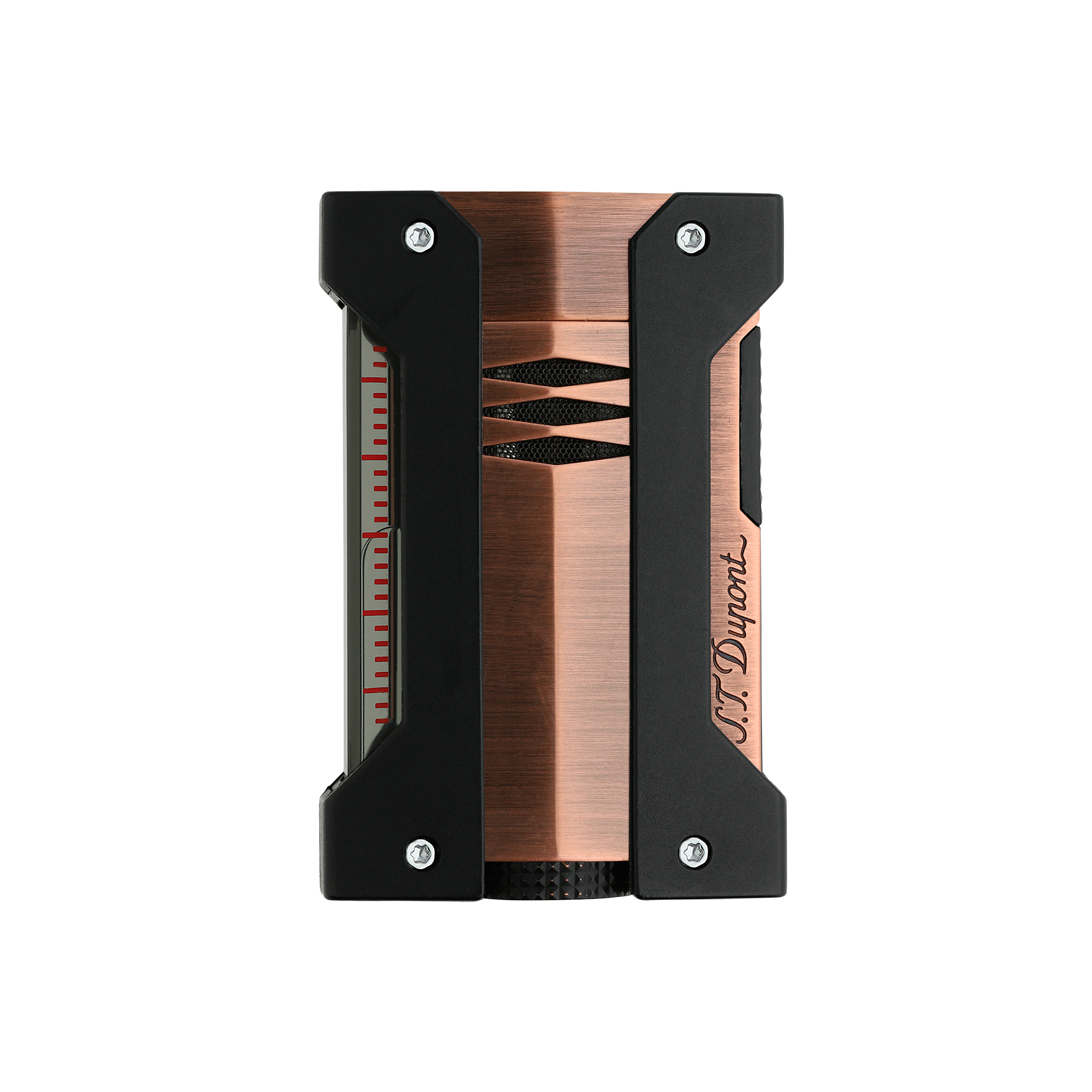
Défi Extreme (2012 - present)
Rather than sticking to the design language of the Ligne 2, the Defi Extreme relied on a modern design. It is mechanical, industrial and adventurous in its appearance. The was produced from an injected metal body with semi-rigid, highly resistant protective coating. It featured a powerful blue torch flame tested to endure the most violent winds and extreme temperatures.
Historical context: A return to the luxurious
After a period of creating a series of more budget friendly lighters, S.T. Dupont once again turned its attention to the market of luxurious lighters. S.T. Dupont opened the Haute Creation department which focuses on extremely limited lighter. At the same time, the introduction of the jet flame lighter posed a problem, the avid cigar smoker now carried two lighters at the same time.
Haute Creation (2012 - present)
Haute Creation is not a single line of lighter, but a complete department that brings artists and craftsmen together to produce exclusive lighters, radically different from the standard production model. More often than not these lighters are produced on request.
Slim 7 (2015 - present)
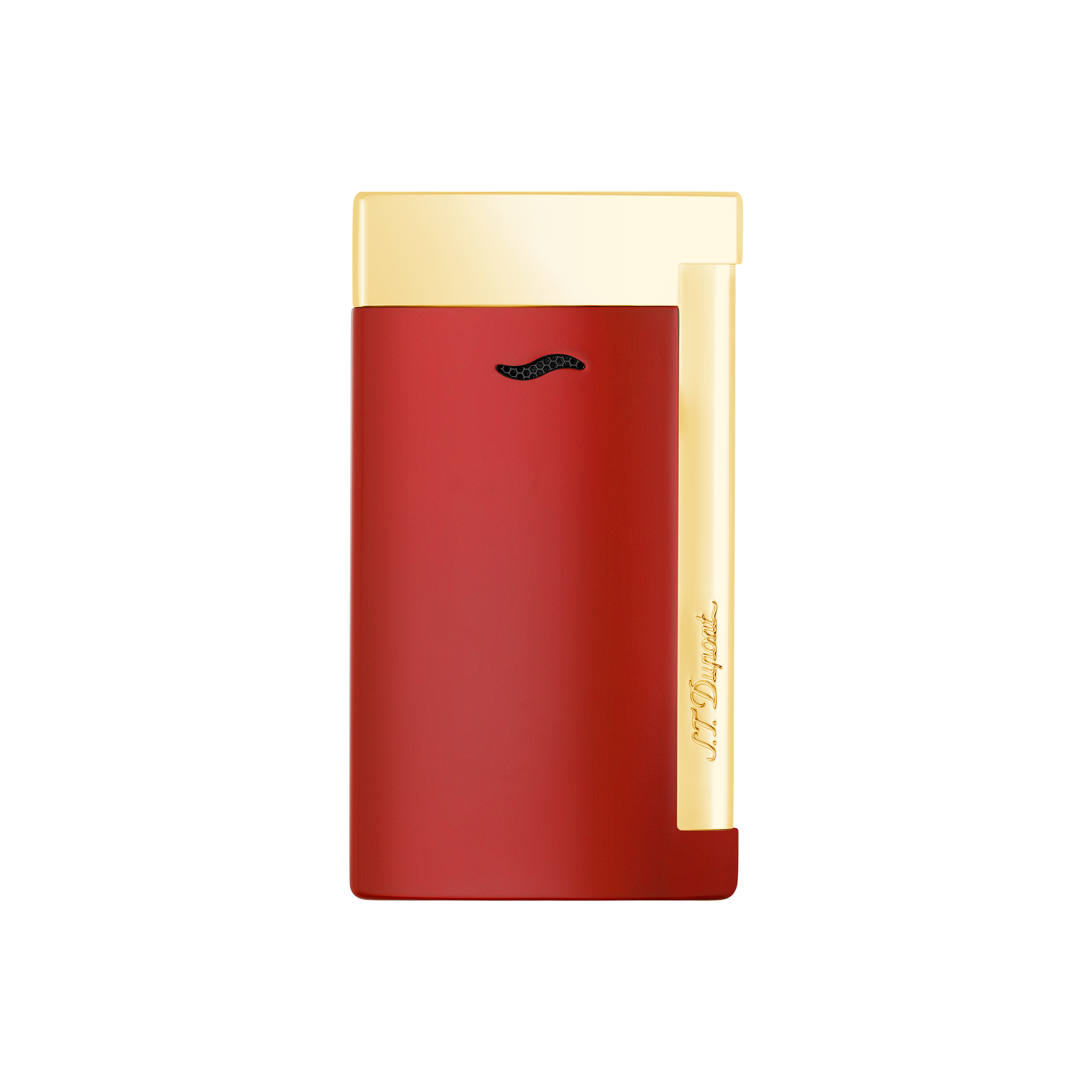
S.T. Dupont continued innovating the luxury jet lighter, which led to the creation of the elegant Slim 7. Being only 7 mm thick and 45 gram in weight this was the lightest model the brand ever produced.
Minijet, Maxijet (2017-present)
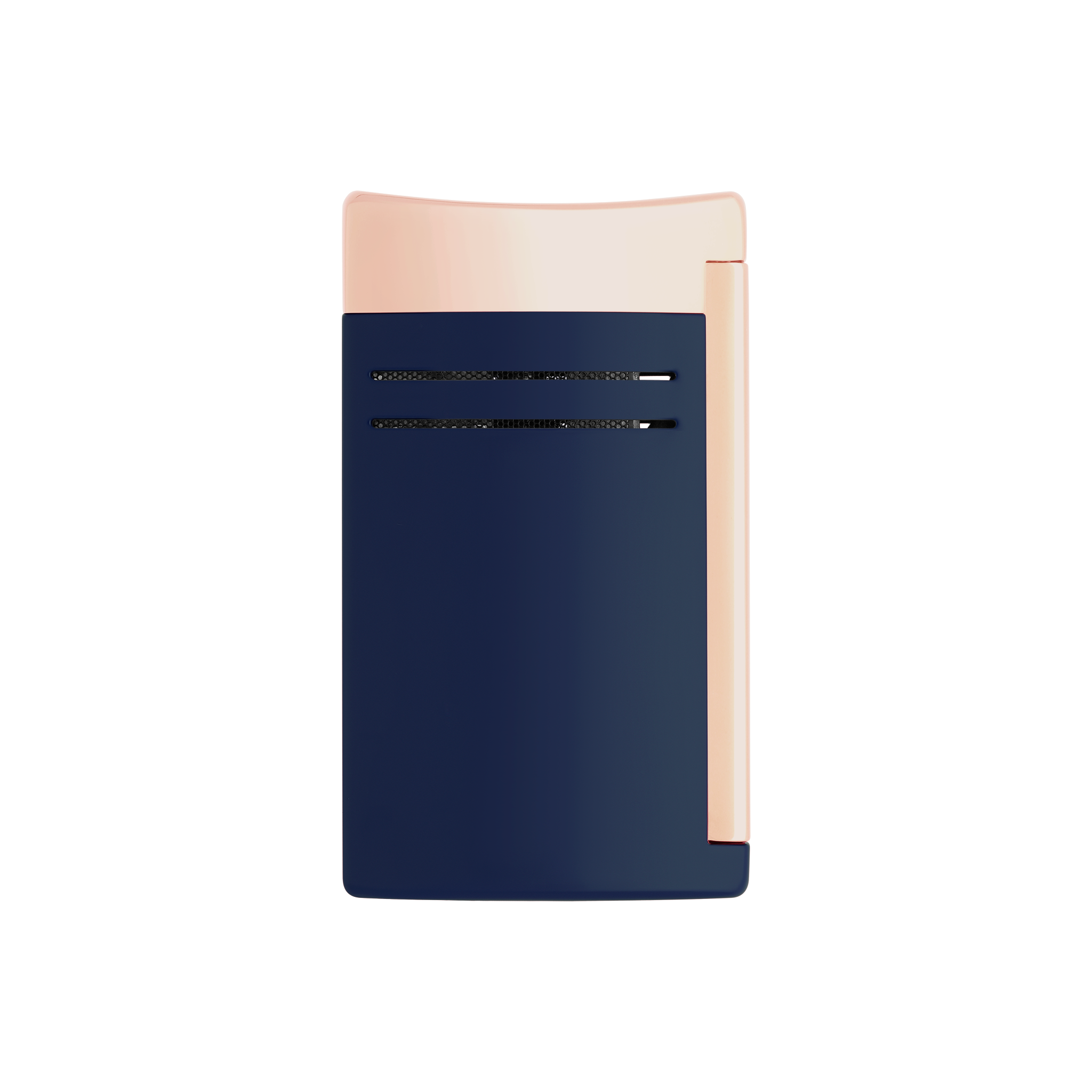
The mini- and Maxijet replaced the X-Tend as the baseline torch lighter within the S.T. Dupont lineup. It is made from zamak, a mix of zinc, aluminium, magnesium and copper. The minijet is slightly smaller than the maxijet which has a larger gas reservoir and slightly more powerful flame.
Initial (2016-present)
The initial was released in 2016 and positioned as a more budget friendly alternative to the increasingly more expensive Ligne 2 model. It is slimmer than the Ligne 2 and noticeably less refined. Instead of having the filling valve covered by a brass cap, it is exposed. the gas adjustment system is not as refined either as it lacks a handle to comfortably adjust the flame. The Initial is yet another attempt from S.T. Dupont to appeal to an audience that might not have the purchasing power to acquire a new Ligne 2.

Le Grand / Le Grand Cling (2017- present)
The jet flame lighter had disturbed the market for luxurious lighters and S.T. Dupont had been struggling to propose a convincing alternative until it engineered a marvel called, Le Grand. Which had the shape of a traditional Ligne 2 and combined both softflame and jetflame mechanism. In 2022 S.T. Dupont released a new version with a cling sound when opening the lid.
Ligne 1 (2025-present)
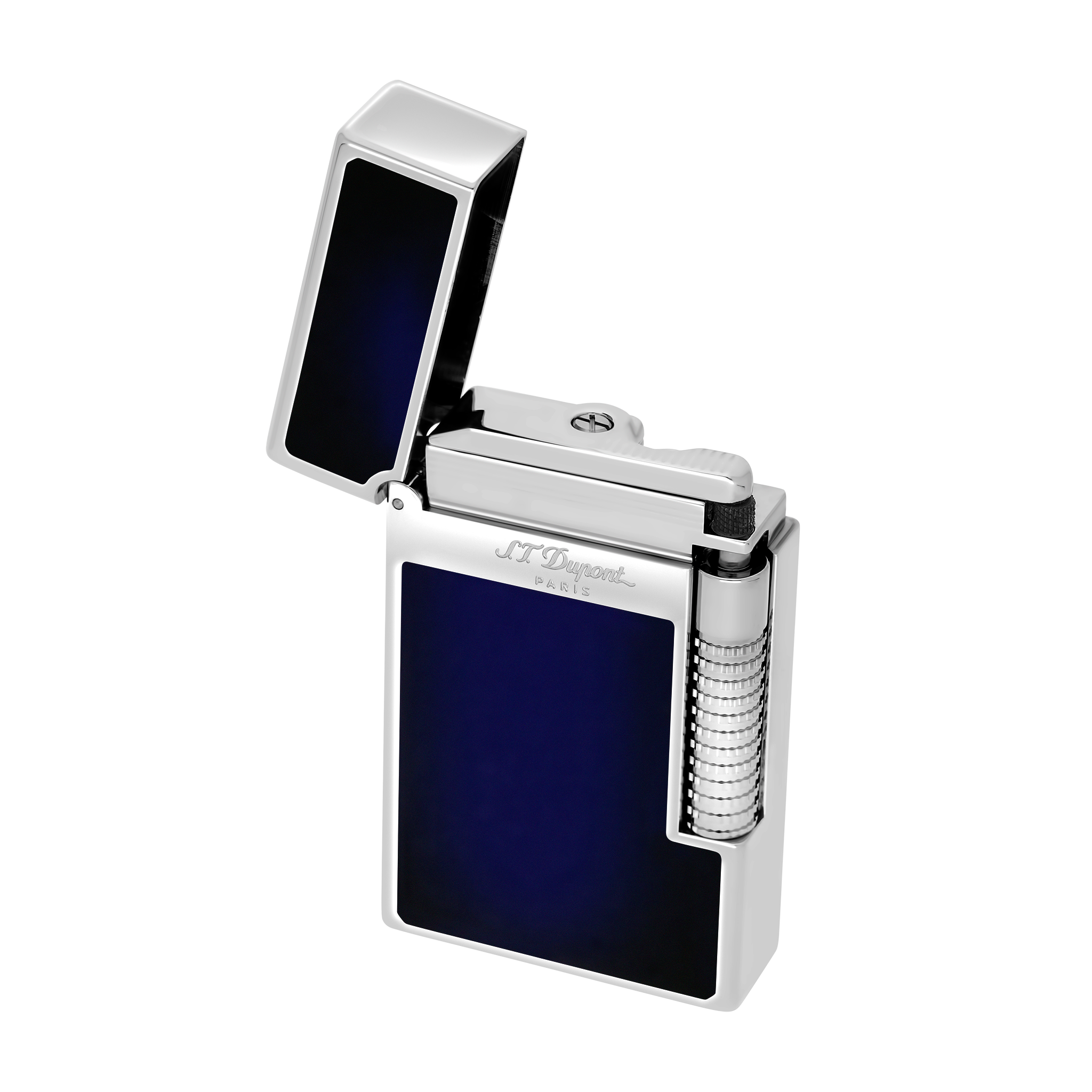
After discontinuing the Ligne 1 in 2013, S.T. Dupont presented an all new interpretation of the Ligne 1 in 2025. The lighter now uses the internal mechanism of the Ligne 2. The proportions are also similar to the Ligne 2 small (56x37mm compared to 50x37mm).
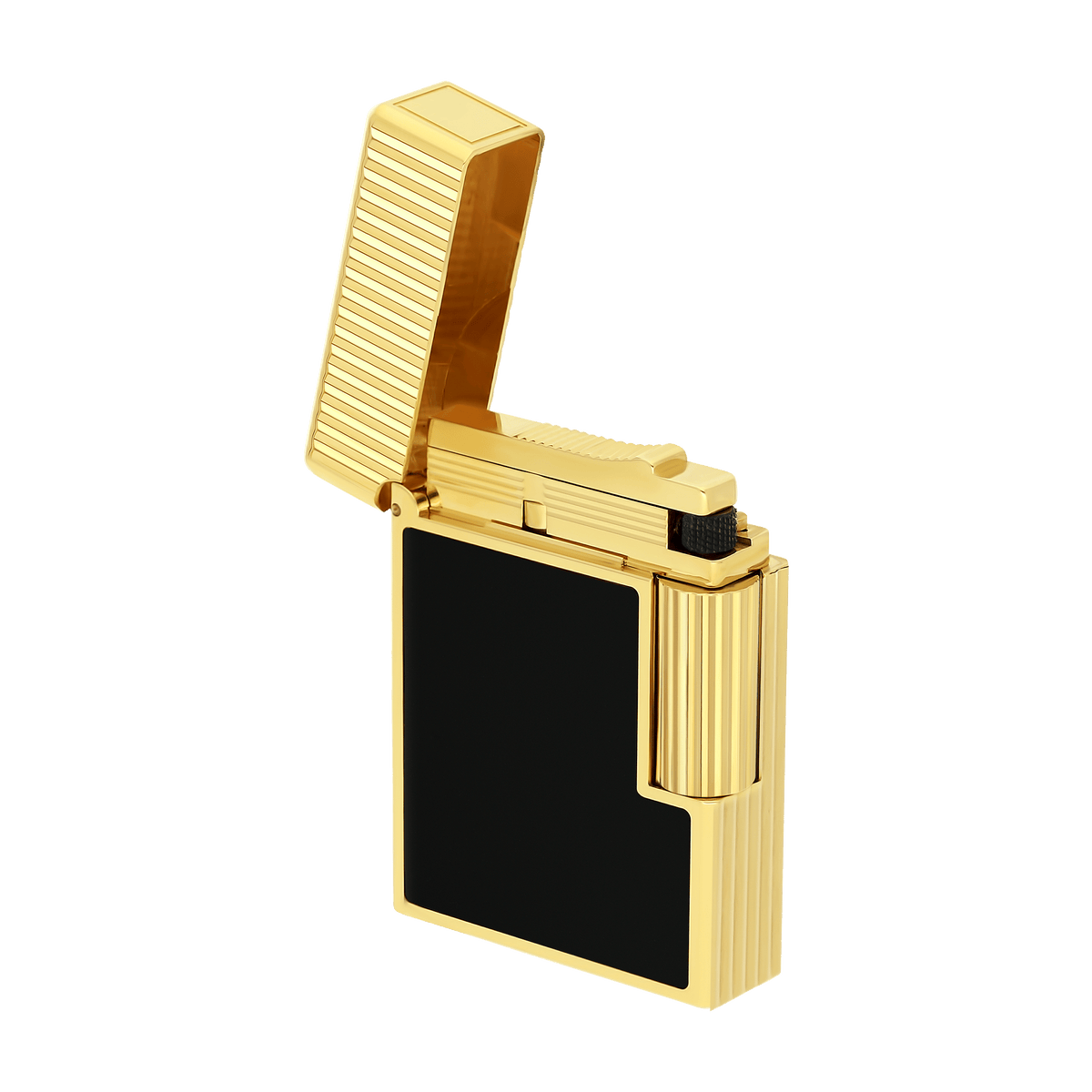
Biggy, Slimmy and Twiggy (2023-present)
All three of these models are jet lighters and follow the same design language. What differentiates them is the size. The twiggy is the thinnest variant, followed by the slimmy that is slim but broad and the biggy that is full size
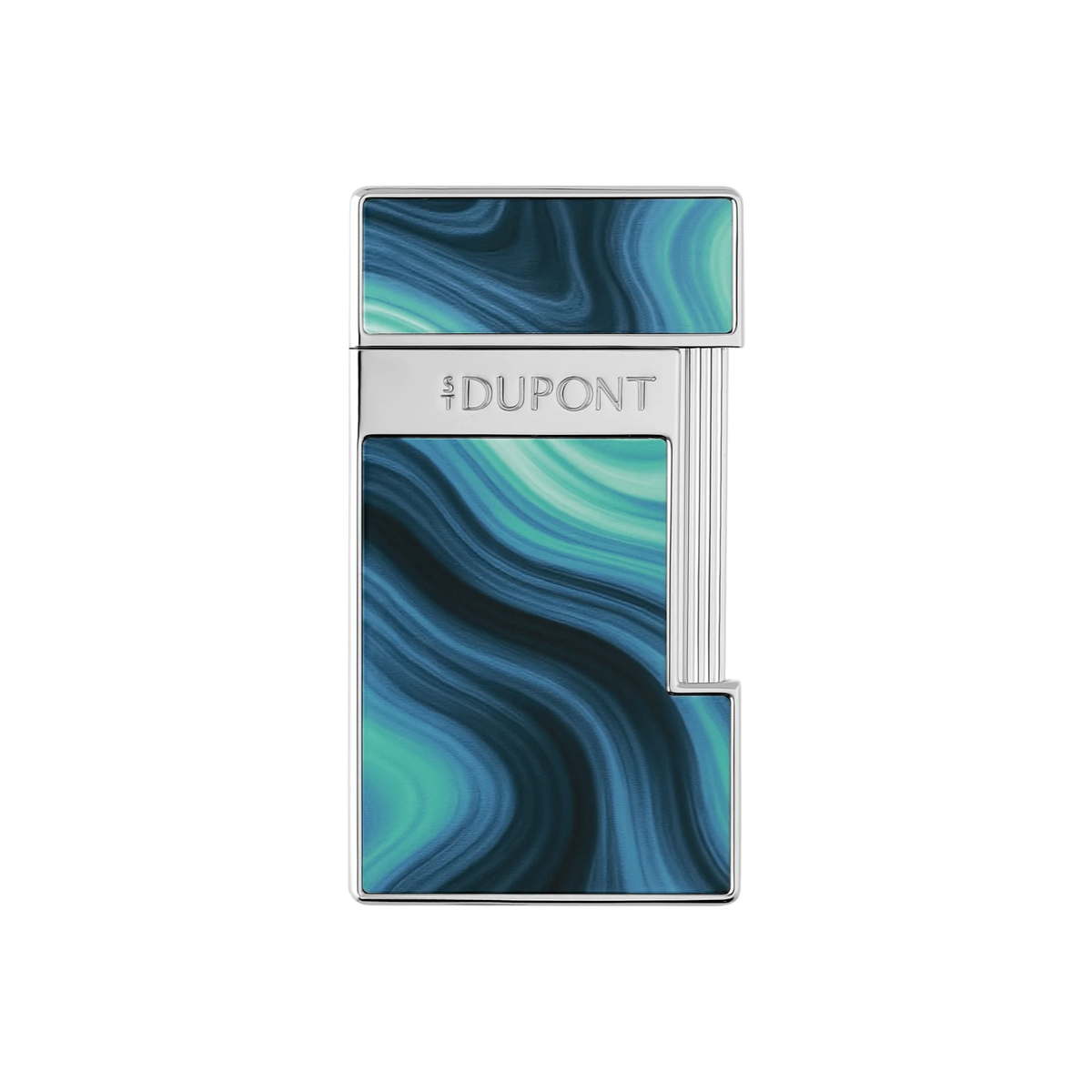
Table lighter (2026 - present)
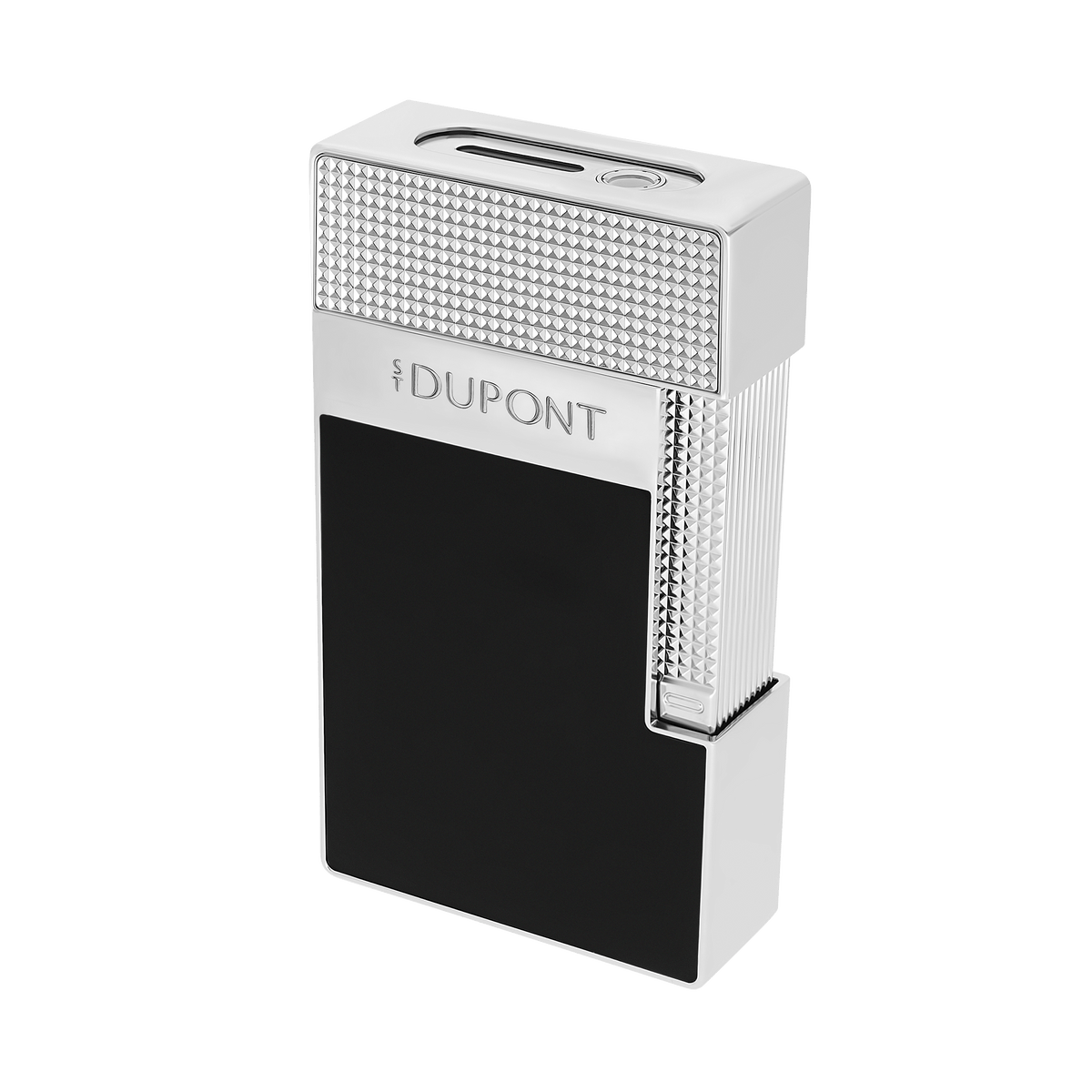
Late 2025 S.T. Dupont announced a new table lighter after discontinuing the Ligne 2 table lighter and the Cylindrique decades earlier. The new lighter has both a torch- and a softflame. It is easily lit by a click and slide mechanism.
Source:
The Eternal Flame